Pump and dump schemes involve the coordinated buying of a cryptocurrency or token to inflate its price artificially, followed by a coordinated sell-off once the price has reached a certain level. This results in the price crashing, leaving unsuspecting investors with significant losses. These schemes are often organized through online forums or social media groups and can involve the use of misleading or false information to entice new investors.
Government agencies have shut down platforms used for laundering cryptocurrency obtained through ransomware and fraud. These operations target key chokepoints in the criminal ecosystem, including escrow services and mixers that anonymize transactions. Activities on dark-web marketplaces are closely monitored by international law enforcement agencies. Purchasing or selling illegal goods—such as controlled substances, counterfeit documents, or stolen data—can result in significant legal penalties, including fines, criminal charges, and imprisonment.
Market Data

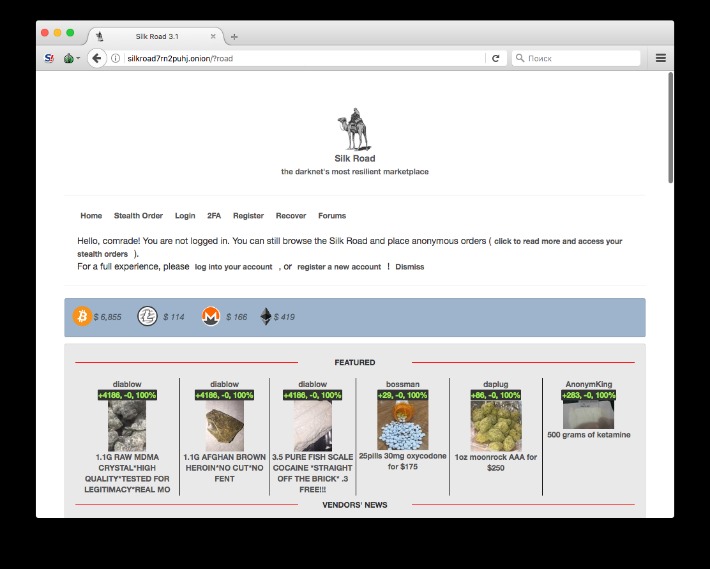
However, these digital assets also present significant risks, becoming tools for illicit activities such as money laundering, terrorist financing, and fraud. Their pseudonymous nature enables criminals to exploit blockchain technology for financial crimes, challenging regulators and law enforcement. Darknet or dark web marketplaces are a hidden part of the internet that surface web users can’t access; they can only be accessed with special anonymity software called Tor. Many people (mostly criminals) use these sites to perform illegal transactions such as selling banned goods and services.
- The amount of money you would get today if you had invested $1,000 in this cryptocurrency a year ago.
- Vendors advertise products through these channels and redirect buyers to secure purchasing portals.
- Users face vulnerabilities like market volatility, scams involving fake escrow services, compromised wallets, or theft through phishing schemes targeting crypto transactions.
- As already mentioned, there are plans to transition to a proof-of-stake algorithm in order to boost the platform’s scalability and add a number of new features.
- Whether you’re new to the dark web or a vet who’s seen it all, you’ll find something here to chew on.
Another Record Year For Ransomware Beckons As Crypto Profits Hit $460m
Frosties NFT was another NFT project that promised exclusive digital art and collectibles. However, shortly after the project’s launch the two 20-year-old creators shut down its website and Discord servers, removed the liquidity from the trading pool and disappeared with USD 1.1 million of investors’ funds. According to the DOJ complaint, the duo transferred the proceeds from the scheme to various cryptocurrency wallets under their control in multiple transactions designed to obfuscate the original source of funds. They were later arrested and charged with wire fraud and conspiracy to commit money laundering.
Law enforcement agencies worldwide employ an evolving array of strategies to track, infiltrate, and ultimately dismantle darknet marketplaces. These methods combine traditional policing techniques—such as undercover operations—with cutting-edge technological measures and multinational coordination. Below are some of the key approaches used to combat illicit online activity. Ultimately, while regulatory frameworks tighten and centralized exchanges adopt stricter compliance measures, darknet operators remain steps ahead by exploiting the anonymity and decentralization offered by DeFi.
Demand For Payment Data And Personal Information:
The total volume in DeFi is currently $43.15B, 21.65% of the total crypto market 24-hour volume. The volume of all stable coins is now $190.5B, which is 95.60% of the total crypto market 24-hour volume. The global crypto market cap is $3.76T, a 3.36% decrease over the last day. Cryptocurrency has enabled Ponzi and pyramid schemes to evolve, luring investors with unrealistic profit promises. Ponzi schemes usually rely on new investors’ funds to pay earlier ones, collapsing once recruitment slows.
Dogwifhat Price Targets $4 As Analysts Eye Breakout From Accumulation Zone
Money laundering amplifies the total amount of illicit activity in the ecosystem because all transactions made to try to launder funds are themselves illicit. It involves processing the criminally-derived funds in order to disguise their illicit origin. Flaws in smart contracts, a key component of DeFi that facilitate automation and transparency, provide attackers a seemingly endless supply of bugs to exploit. Similarly, scammers also create fraudulent websites, social media accounts, or email campaigns to impersonate legitimate crypto projects. Unsuspecting users send their cryptocurrencies, but the scammers disappear with the funds, leaving investors with nothing. Some drainers also attempt to scam their criminal users, for example by sending high value NFTs or tokens to the original creator of the malicious contract and less valuable tokens to the actor wielding the drainer.
- The consensus layer will synchronize the chain state across the network, while the execution layer handles transactions and block production.
- Ethical considerations are essential to ensure the vendor role aligns with legal guidelines.
- The cryptocurrency space remains vulnerable to scams that exploit investor trust and security weaknesses.
- TRM Labs estimates that total transactions, including Monero, may have reached $300–$400 million.
- According to a recent trend, the dark marketplaces faced a decline in revenue.
Ethereum Price Live Data
The suspect used cashiers checks and cryptocurrency ATMs to transfer USD 565,000 on behalf of the criminals that committed fraud in order to steal the victim’s funds. As smurfing can take place by unwitting third parties, it is often difficult to identify as the person committing the layering activity may not be aware of the source or destination of the funds. In August 2022, OFAC sanctioned Tornado Cash, which has been used by North Korean cyber-criminals and other threat actors to launder the proceeds of hacks and other illicit activity. TRM Labs showed that North Korean cyber actors used Tornado Cash to launder over USD 1 billion of stolen funds in at least ten major cryptocurrency heists. Payment processors can be abused by criminals seeking to launder money, most commonly in placement and layering.
North Korea Hacks Crypto: More Targets, Lower Gains
One of the biggest problems cybersecurity teams face isn’t a lack of tools — it’s too many alerts. And beware—while many explore out of curiosity or for research purposes, it’s important to remember that engaging with these platforms, even as an observer, can lead to serious legal and ethical consequences. Into 2026, we see a barbell as the most sensible way to express the thesis with Robinhood as the core, steadier compounder, and Coinbase as the higher-beta call option on the next crypto up-leg. The Ethereum blockchain was launched in 2015 by the Ethereum Foundation under the codename ‘Frontier’.
These days, it lists over 11,600 illegal items, including hard drugs, hacking tools, and all kinds of cybercrime services. It has a search option to let you find local and international products and services on the dark web. A lot of vendors from all over the world are registered here, offering an extensive range of products, including digital services, security tools, and other equipment.

While these marketplaces continue to serve legitimate purposes, such as enabling secure communication and privacy protection, they also remain hotspots for illicit activities and cybercrime. Ideal marketplaces support anonymous browsing through networks like Tor and I2P, utilize privacy-focused cryptocurrencies such as Monero, and implement measures to prevent tracking and transaction tracing. Platforms that provide clear guidelines for maintaining operational security (OpSec) and offer built-in tools for data obfuscation are especially favored.
One of the major differences between Bitcoin and Ethereum’s economics is that the latter is not deflationary, i.e. its total supply is not limited. Ethereum’s developers justify this by not wanting to have a “fixed security budget” for the network. Being able to adjust ETH’s issuance rate via consensus allows the network to maintain the minimum issuance needed for adequate security.