Undercover agents posed as both buyers and sellers, engaging in hundreds of transactions on the platform, gathering as much information as possible about the market’s operations. It began by freezing their cryptocurrency funds, so they couldn’t withdraw their money. Then, the scammers threatened to share the private chat details that were supposed to be secret.
The market’s staff created the “Incognite foundation”, with the intent “to maximize freedom, welfare, and privacy for all”. The foundation helps fund freedom and privacy-centered organizations like the Tor project and Monero. The staff has pledged a portion of their profits to the foundation, and users can freely donate to it.

ICE USWDS Footer Links
The US authorities arrested Lin at John F. Kennedy Airport on May 18, 2024, effectively ending his illegal activities. He now faces multiple charges, including engaging in a criminal enterprise and conspiracy to sell adulterated medication, with potential penalties ranging from 10 years to a lifetime in prison. The marketplace was raking in millions of dollars in cryptocurrency, with Lin taking a 5% cut from every transaction.

A Darknet Empire
Born in Taiwan, Lin was a bright student, excelling in computer science and cybersecurity. By the time he graduated from National Taiwan University in June 2023, he had already built a reputation as a blockchain enthusiast and a skilled developer. In perhaps the most extraordinary twist in the case, Lin, who is only 23 years-old, worked for the Taiwanese Ministry of Foreign Affairs. As part of his job, Lin trained law enforcement on how to use blockchain analytics. Lin seems like a knowledgeable person in the field of security and cryptocurrency, as per social media accounts listed in the complaint against him. Those wishing to trade on Incognito Markets can register by paying a vendor fee of €650 (payable in XMR).
In the end, the strategies Lin used to operate Incognito Market were a blend of tech entrepreneurship, underworld cunning, and audacious deception. He leveraged his programming and crypto knowledge to build criminal infrastructure, used his position in a government role to appear above suspicion, and exploited the trust of thousands of users until greed – and perhaps fear – drove him to perform an exit scam on his own community. It was a breathtaking run for “Pharaoh,” but as the next section shows, law enforcement was meticulously closing in on this dark web chameleon.
Special Features
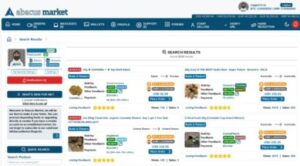
The site allowed buyers to search through thousands of listings for narcotics of their choice. It opened in October 2020 and, as reported by KrebsOnSecurity, closed last March when its operators extorted both buyers and sellers of fees ranging from $100 to $2,000 in exchange for not revealing text messages and transaction records showing their participation in the marketplace. In the 41 months that Incognito Market was open, it facilitated the sale of more than $100 million of narcotics.
Incognito Market: The Notorious Dark Web Marketplace And The Fall Of ‘Pharaoh’
Accusations intensified after Incognito Market released an official statement on the site confirming earlier suspicions. The announcement stated that operators had collated incriminating information about vendor identities, purchase details and private messages. They threatened to leak the contents unless users paid a ransom commensurate with the volume of their transactions on the platform.
This banking service obscured the locations and identities of vendors and customers from each other and from law enforcement. It kept the financial information of vendors and buyers separate, making it more difficult for any one actor on the marketplace to learn any other actor’s true identity, a complaint filed against Lin said. One particularly revealing moment came in February 2024, when Incognito users reported that BTC withdrawals were disabled—likely part of a deliberate “exit scam.” Lin, or others acting on his behalf, threatened to leak vendor identities to law enforcement unless paid.
US Lawmakers Target ‘Adversarial AI’ In Bipartisan Push To Fortify Federal Systems
The arrest of Riu-Siang Lin, the former administrator of the closed Incognito marketplace, by the US authorities on 18th May is causing a domino effect in the underground illegal communities, leading to an alleged exit plan on the SuperMarket. On Dreads, the co-administrator of the Supermarket announced to the community on May 21, 2024, that the wallets had been emptied and that the only person who would have had access to them was “FatherBear”, the other administrator of the marketplace. Another prong of the investigation was old-fashioned OSINT (Open-Source Intelligence) and surveillance. His LinkedIn and social media posts – bragging about Chainalysis certifications and showing diagrams of darknet money flows – may not have been direct evidence of running Incognito, but they painted a picture of someone deeply involved in the subject matter. It likely raised eyebrows that a young diplomat was so invested in dark web analytics.
Decoding Incognito Exit Scam
This discovery gave law enforcement agencies the leverage they needed to intensify their efforts against Incognito. While Silk Road and Hydra had laid the groundwork for darknet markets, they were not without their flaws. Silk Road, the first major darknet market, was revolutionary but ultimately flawed in its security protocols, leading to its downfall and the arrest of its founder, Ross Ulbricht. Hydra, on the other hand, was massive, dominating the Russian-speaking dark web but limiting its reach and user base.
- However, Incognito’s case shows that even with Monero in the mix, operational security must be airtight – a single point of weakness (like Lin’s use of a BTC wallet for personal expenses) can compromise the entire scheme.
- Incognito charged vendors a 5% commission on every sale, a business model that generated millions of dollars in revenue for the platform.
- Its intuitive interface fosters exploration, but it’s crucial for users to navigate with caution and remain ethically aware due to the inherent nature of darknet activities.
- How did a young man from Taiwan, a brilliant developer with a promising career, end up as one of the most wanted cybercriminals in the world?
- The adulterated drugs conspiracy, which is a more unusual charge in this context, relates to the sale of fake pharmaceutical pills (like the fentanyl passed off as oxycodone) and carries up to 5 years in prison.
- The escrow service was set in such a way that a buyer’s money would be released to a seller only after specified actions, for example, the shipment of narcotics is made.
He “was scheduled to go to Singapore via New York when he was arrested by the police in New York,” he said, adding that Taiwan was closely monitoring the case. Incognito Market included “many features of legitimate e-commerce sites such as branding, advertising, and customer service,” the Justice Department said. Hundreds of pounds of cocaine, methamphetamines and other drugs were sold on Incognito Market since its launch in October 2020, it said. The story of Rui-Siang Lin and Incognito Market is a cautionary tale for both cybercriminals and cybersecurity professionals.
The announcement that data supposedly deleted through the years were about to be released to law enforcement agencies heightened the stakes. Despite revealing on April 1 that the entire fiasco was just one big April Fool’s joke, people were pissed at the marketplace — especially since a bunch of vendors had already paid up. Whether it was indeed a farce or a genuine fraudulent event, the damage was extensive.
Additionally, Lin made the critical mistake of using identifiable personal information at some point during his operations, which law enforcement was able to capture. This could have been during the registration of online accounts or through other transactions that required some form of identification. Lin’s decision to implement a banking system within the market also had a profound impact on the dark web’s economy.
Incognito Market Built-in Wallet
This resulted in all the mirrors to appear offline so that others wouldn’t fall for the extortion. At that moment, Pharoah tried to disconnect all their mirrors as their front servers couldn’t handle it. The DDOS has been heavily effective due to Pharoah prioritizing low-end specifications rather than 1 massive server per mirror, or high end bandwidth with internal port speed. Lin’s GitHub account describes him as a “Backend and Blockchain Engineer, Monero Enthusiast.” This GitHub account has approximately 35 publicly available software coding projects. “Collectively, these coding projects indicate that LIN has significant technical computing knowledge, including knowledge necessary to administer a site like (“Incognito Marketplace”),” the complaint said. Its front page promised visitors that “Incognito Market is a market with a focus on both ease of use and security. With a small, dedicated staff team and nothing useless or bloated to slow you down. Be a part of something bigger and enjoy the nice UI/UX.”
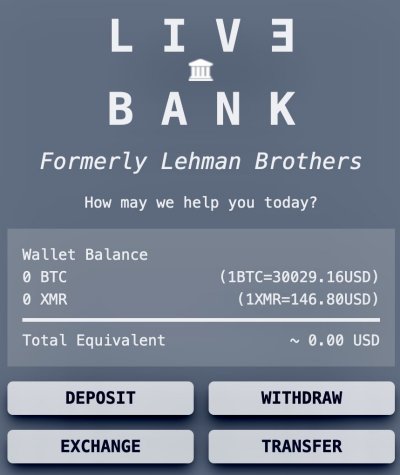
A 23-year-old man from Taiwan has been arrested on charges of selling at least $100 million worth of illegal drugs online through a site on the dark web known as the “Incognito Market.” In addition to standard items like drugs and fraud-related materials, the market offers a wealth of unique and captivating products, all described in an engaging manner. It supports Bitcoin (BTC) and Monero (XMR) for transactions, highlighting its commitment to privacy and security, and adopts a direct payment method for each transaction, catering to users who prioritize privacy.