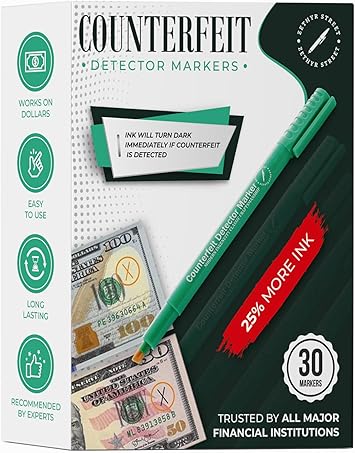
Hidden marketplaces accessible only via encrypted browsers such as Tor allow counterfeiters to sell their products anonymously. These platforms often offer a wide range of counterfeit bills — from US dollars and Euros to British pounds and other major currencies — and promise buyers “high-quality” notes that can pass basic security checks. Transactions are typically conducted using cryptocurrencies like Bitcoin or Monero, adding another layer of anonymity and making it difficult for law enforcement agencies to track. In conclusion, the dark web presents significant challenges in combating money laundering and financial fraud due to its anonymity and encrypted nature.
The dark web is a hub for ransomware tools and phishing kits that criminals sell or rent to launch attacks on people like you. Illegal software, fake documents, and hacking services are all part of this underground market. A common method for criminals on the dark web who abuse legal services and sites for fraud activity.For example, SmartMixer or Dark Wallet are cryptocurrency mixing sites that can be manipulated for money laundering.
Microsoft To Make All Products Quantum Safe By 2033
Money laundering and financial fraud are prevalent on the dark web, with criminals employing diverse methods to conduct their operations undetected. As technology advances, the dark web continues to evolve, potentially becoming an even greater threat to cybersecurity and financial integrity. Individuals purchase fake IDs and other fraudulent documents for a variety of reasons. The accessibility and perceived anonymity of the dark web make these transactions increasingly common, highlighting an escalating security challenge for law enforcement and government agencies worldwide. Fake IDs and forged documents—ranging from driver’s licenses to passports—are increasingly accessible through the shadowy networks of the dark web, a hidden segment of the internet accessible only with specialized tools like Tor.
What Clear Trends Are Emerging For Cybersecurity In 2025?
Identity theft is a prevalent form of financial fraud on the dark web, with criminals stealing personal information such as social security numbers, credit card details, and bank account information to commit fraudulent activities. This stolen information is often sold on underground marketplaces, where criminals can purchase it to carry out identity theft and financial fraud. In addition to money laundering, the dark web is also a breeding ground for various financial fraud schemes. One prevalent form of financial fraud on the dark web is identity theft, where criminals steal personal information such as social security numbers, credit card details, and bank account information to commit fraudulent activities.
High-resolution printers, specialized inks, and even tutorials on how to mimic security features of legitimate bills are readily available. As a result, even amateur counterfeiters can create money that closely resembles genuine currency. One of the key attractions of virtual assets, such as cryptocurrencies like Bitcoin, Ethereum, and Monero, is their perceived anonymity. Transactions made with virtual assets on the dark web can be difficult to trace, making it challenging for law enforcement agencies and financial institutions to identify and track illicit funds (Chartered Accountants Worldwide).
- It has an active forum and community along with an extensive user vetting process.
- By reviewing the permissions of an app or software, you can ensure that it’s not accessing more information than necessary.
- Again, such a discrepancy might be due to biased expectations by law enforcement, as searches are sometimes based on shipment origins (Männistö et al., 2021).
- In the Welcome to Video case (2019), investigators traced Bitcoin transactions directly from the dark web back to individuals across the globe, resulting in hundreds of arrests and convictions for illegal activity.
- Similarly, estimating the sales volume and monetary value of counterfeits on dark markets is accompanied by uncertainty, which is further addressed in the next section (Limitations).
Trio Jailed Over Global Online Drug Deals
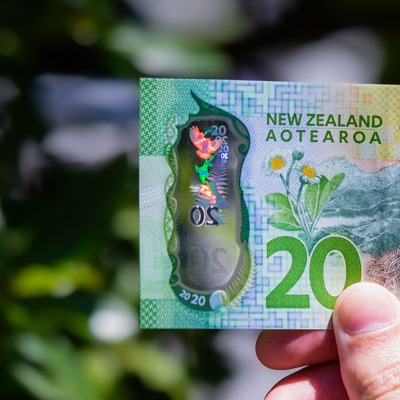
Capable guardians can include those involved in security at country borders or those involved in inspecting goods at other stages of the supply chain (Marucheck et al., 2011; Tang, 2006). For example, when manufactured products are transported, transport personnel and employees could also act as guardians (Hollis & Wilson, 2014). However, effective guardianship requires a clear understanding of the problem and processes to monitor it, such as reporting procedures.
- Ratings are easily manipulated, and even sellers with long track records have been known to suddenly disappear with their customers’ crypto-coins, only to set up shop later under a different alias.
- The Rational Choice perspective considers the offender’s choice to commit a crime (e.g., counterfeiting a product) and influencing factors of the offenders’ decisions, such as the perceived risks and rewards (Clarke & Cornish, 1985).
- Beyond abstract ethical considerations, document fraud frequently results in direct harm to individuals.
- Interestingly, the observed proportion of counterfeits on dark markets coincides well with the estimated overall proportion of counterfeits worldwide (3.3%) discussed above (OECD/EUIPO, 2019).
- While Western economies have relatively high security in their currencies, poorer regions are particularly vulnerable.
- Law enforcement officers conducting routine traffic stops, public event checks, or investigations often detect counterfeit IDs through portable scanners and specialized software.
Why Are All The Darknet Markets Down
Because some of the categories had low numbers, which would likely affect the classifier’s performance, when training the classifier, we manually added eight listings to the “Tobacco” category and six listings to the “Cosmetics” category. Table 2 shows the resulting distribution (after manually adding listings) of the labeled categories for the randomly selected subset of counterfeits. However, estimating counterfeit goods’ trade (value) is difficult and is mostly achieved through auditing goods seized at borders (OECD, 2018; OECD/EUIPO, 2019). Thus, current estimates often exclude domestically traded counterfeits or digital products, and since not all counterfeits will be seized at ports, estimates of what is traded may be incomplete. For example, the number of routinely checked containers at major ports in Genoa (Italy), Melbourne (Australia), Montreal (Canada), New York (USA), and Liverpool (UK) together only account for 2–5% of all traffic (Sergi, 2022).
Banking And Financial Institutions (KYC)
Since we selected only ten random samples for each product category, the estimated price differences are only intended to illustrate the observed trend and should not be regarded as a complete analysis. Despite the perceived anonymity of cryptocurrencies like Bitcoin, law enforcement leverages advanced blockchain analysis tools (such as Chainalysis and Elliptic) to track transactions from dark-web markets back to real-world identities. While some cryptocurrencies, such as Monero, are more challenging to trace due to enhanced privacy features, law enforcement agencies continuously develop methods to uncover the financial trails left by criminal actors. Agents often infiltrate dark web marketplaces by posing as buyers or vendors to gather intelligence on illegal activities.
Use Of Virtual Assets In Money Laundering

Benjamin responds by defending the product, saying that buyers are using it improperly, and eventually agreeing that the counterfeit notes are not what they were. After falling off the map, Billmaker suddenly had popped up on other dark web marketplaces. In January 2024, a huge data leak exposed the names, phone numbers, addresses, and Aadhaar details of 750 million Indian telecom users. Cyber experts found all this information inside the dark web, where criminals were selling it secretly to anyone who would pay. Law enforcement agencies keep an ear to the ground on the dark web looking for stolen data from recent security breaches that might lead to a trail to the perpetrators. On the Silk Road, you could buy banned energy drinks, hacking services, digital goods (such as malware and pirated software), and forgeries (such as fake licenses and other illicit documents).
Document fraud significantly impacts broader society, creating risks far beyond immediate legal consequences for individuals involved. Fake identification documents facilitate serious crimes such as human trafficking, financial fraud, terrorism, illegal immigration, and identity theft—activities that profoundly destabilize communities and compromise national security. For businesses and consumers, unknowingly accepting fake currency can lead to significant financial losses, as counterfeit bills have no real value and cannot be reimbursed. For the economy, an increase in counterfeit money can erode trust in the financial system, lead to inflation, and disrupt commerce.
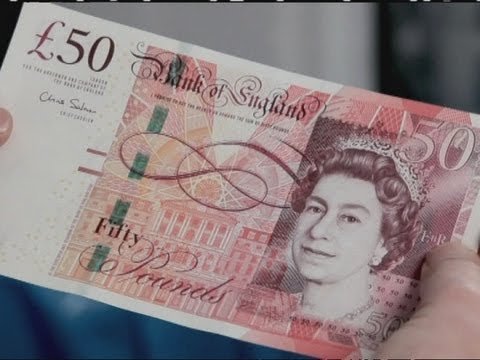
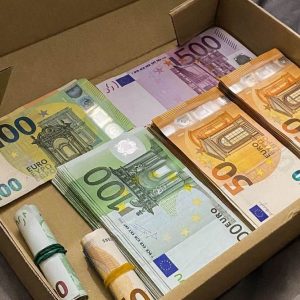
Cybercrime units routinely monitor dark web forums, chat platforms, and encrypted messaging services, collecting intelligence and building digital dossiers on high-value targets. Authorities employ advanced data-mining software, network analytics, and artificial intelligence-driven algorithms to detect patterns indicative of illegal trade or fraudulent document production. In conclusion, the pathway fake documents take to arrive on dark web markets is complex and multifaceted, involving cybercrime, sophisticated forgery techniques, and thriving digital black markets. Understanding these methods is crucial for law enforcement, cybersecurity professionals, and the general public in their efforts to mitigate these ongoing threats.
Cryptocurrencies operate on decentralized blockchain networks, which provide a level of privacy and security. While the blockchain technology itself is transparent, the true identities behind the transactions can remain anonymous or pseudonymous. The dark web is a network of unindexed web content that operates through encryption and routing techniques. It originated from the need for secure communication channels in the intelligence community and has since become a tool used by various groups worldwide. While it serves as a platform for free speech and supports law enforcement and government activities, an estimated 70% of dark web activities facilitate illegal transactions and trade.
Thus, for those products, we cannot say which European countries they originate from specifically. However, as expected, the overall number of offers is much lower, with counterfeits accounting for around 2.69% of all listings across markets. Interestingly, the observed proportion of counterfeits on dark markets coincides well with the estimated overall proportion of counterfeits worldwide (3.3%) discussed above (OECD/EUIPO, 2019).