Read on to learn about the Silk Road, its successors, and how LifeLock Standard can help you find out if your information is on the dark web. The BBC reported that in the two and a half years it was operational, users sold more than $200 million in drugs through the site, which also offered fake IDs and hacking tools. “It’s kinda earned the reputation as the eBay of drugs,” cybersecurity researcher Brian Krebs reportedly told NPR in 2013, following Ulbricht’s arrest. The original Silk Road is no longer active, but it paved the way for many successor dark web marketplaces that continue to operate today, albeit with similar risks of scams and legal consequences. Now, after being sentenced to life in prison and spending more than a decade behind bars, Ulbricht will walk free, thanks to Donald Trump—and to the president’s ever-closer ties to the American cryptocurrency world.

Silk Road Dark Web: History And How It Shaped Online Crime
- The Silk Road was an online black market where users could buy and sell illicit goods anonymously.
- Silk Road was used by thousands of drug dealers, distributing hundreds of kilograms of illegal drugs to more than 100,000 buyers, totaling more than $200m (£131m).
- Within Tor, customers could use the Silk Road dark web link to anonymously connect with vendors and buy illegal goods with cryptocurrency.
- They offer services such as market penetration testing and market development/hosting assistance.
She had no idea how her boyfriend could make a crystal, but she knew she was in love. Ross Ulbricht was deep into his regular drum circle when he spotted her. As Ross slapped the hide on his djembe, a West African drum, Julia Vie sat across the circle.
How Do Transactions Work?
OnionName is a specialist service that allows you to purchase a .onion domain to host your own .onion website. Because of how the network works, you can’t purchase an onion domain from a normal registrar like GoDaddy. Suppose you don’t want to use the dark web version of Facebook or don’t trust it. There are a whole host of dark-web-based social networks, such as Galaxy3. You’ll be surprised to know that you can access Facebook via the dark web by using the official Facebook .onion site.
How Long Is Ross Ulbricht’s Prison Sentence?
The defense admitted while he had created Silk Road, he handed it off to others, who then lured him back in to take the fall. Two undercover agents stationed near Ross created a diversion by staging a fight. In any investigation there’s a watershed moment — and in the Silk Road case it came when Alford mentioned the word “frosty.” One of the FBI cyber team agents was floored. By now Homeland Security agent Jared Der-Yeghiayan had made 3,600 drug seizures. He even went on the site and made more than 50 undercover purchases.
Hollywood actor Keanu Reeves narrated a 2015 documentary on the Silk Road legend called Dark Web which chronicles the rise and fall of the black market and its founder. That was how Force found him when the SWAT team finished ransacking his house. Force was running that show; as Nob, he’d orchestrated the shipment of coke, and the whole raid was part of the growing Marco Polo task force investigating Silk Road. He’d watched Green take the bait from a command post across the street, and when he walked in a few minutes later, Green was cuffed on the floor, blabbing already. Said he was a former EMT; he was just trying to help people; they could have just knocked; he thought the package was something else, a totally legal drug called N-Bombe.
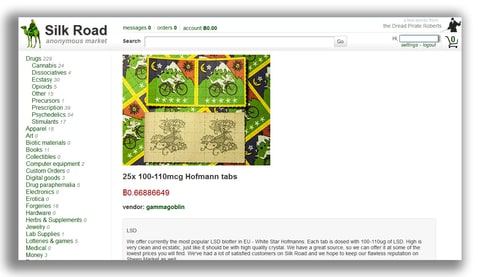
Civil Forfeiture Of Silk Road-associated Bitcoins
It was a remarkable score for Tarbell, especially since he was still a rookie. He was heartbroken, later telling a woman he met on OkCupid how he’d recently been in love and was trying to get over it. The Silk Road dark web marketplace changed the way cybercrime operates, showing how technology like Tor and Bitcoin can facilitate anonymous transactions. Although Silk Road was shut down, it marked the beginning of a new era of cybercrime, inspiring countless similar operations and underscoring the role of technology in modern crime. The Silk Road was founded in 2011 by Ross Ulbricht, who went by the alias “Dread Pirate Roberts.” Ulbricht envisioned a decentralized online marketplace free from government intervention. To achieve this, he leveraged Tor, a privacy-focused browser that masked users’ identities, along with Bitcoin for anonymous transactions.
The Rise And Fall Of Ross Ulbricht
Looking for a new perspective, prosecutors asked the New York FBI cyber branch to join the hunt. This was an elite team – with experience working inside the dark web and with Tor – also known as the onion router – where Silk Road was hidden. But even with his identity hidden, Ross was starting to get nervous. Determined to find the source of the drugs, the agent showed up at a residence where one of the packages was headed – to conduct a “knock-and-talk.” Ross followed an unconventional path, creating a free market website, where users could avoid government scrutiny.
Inside The FBI Takedown Of The Mastermind Behind Website Offering Drugs, Guns And Murders For Hire
Previously, the Silk Road was the most popular darknet market, created by Ross Ulbricht, AKA Dread Pirate Roberts. So, to find a current list of the most popular markets (such as White House Market or Empire), you can go to either Darknetlive or Dark.Fail. Dread was made by a Reddit user known as ‘HugBunter’ and was inspired by the recent ban of the ‘darknetmarkets’ subreddit.
- On Tuesday, he said he had called Ulbricht’s mother to inform her that he had granted a pardon to her son.
- Federal documentation — an “Executive Grant of Clemancy” (archived) signed by Trump — says he granted a “full and unconditional pardon” to Ulbricht.
- In addition to the Department of Homeland Security, the DEA (Drug Enforcement Agency) was also investigating Silk Road as part of a task force in Baltimore.
- Silk Road is only accessible through Tor, a service which allows users to browse anonymously online.
Some also have a rating system for vendors, just like the original Silk Road. The FBI seized crypto wallets of Silk Road users and arrested Ulbricht, collecting millions of dollars worth of Bitcoin. The seizure of Bitcoin and arrest of Ulbricht were meant to send a clear message to other cybercriminal enterprises. Dream Market was founded in late 2013, and officially shut down on April 30, 2019.
After a 12-day trial and less than four hours of deliberations, a jury found Ross Ulbricht guilty on all counts. Undercover FBI agents quickly took their places inside the library. In October 2013, members of the FBI cyber security team traveled to San Francisco to arrest the man they believed was the mastermind behind Silk Road, Ross Ulbricht. In August 2013, Jared Der-Yeghiayan joined forces with the FBI New York cyber team.
How Did Investigators Catch The Dread Pirate Roberts (DPR) In San Francisco?
A Silk Road vendor who went by the online name “Variety Jones” picked up the banner. Jones, who advised Ulbricht to start using the handle Dread Pirate Roberts on the site and in his business communications, has never been publicly identified. All those drugs—Ulbricht reportedly favored hallucinogens—didn’t seem to dull his wits. His SAT scores got him a full scholarship to the University of Texas at Dallas, where he worked on organic solar cells, a burgeoning branch of green energy research that relies on polymers rather than traditional materials. Ulbricht’s exchange was the logical extension of Craigslist or eBay or Uber, a company matching customers with providers and collecting a fee, although in this case the buyers weren’t seeking poodle ashtrays or a ride in a Prius.
What Happened To The Seized Bitcoins?
Ulbricht’s arrest occurred while he was logged into his laptop with the Silk Road admin panel open. This crucial piece of evidence linked him directly to the site’s operations. The FBI also discovered a journal and a cache of incriminating documents on his computer, further solidifying their case against him. The end of the Silk Road began with the arrest of Ross Ulbricht, who was apprehended by the FBI in a San Francisco public library on October 1, 2013.
When he saw a reference to San Francisco, things started to click. Early in the summer of 2013, after nearly a year of trying to crack the inner workings of the Silk Road website, agents in the FBI’s New York Cyber Branch finally got a break. Ross was proud of what he’d created and even did an interview with Forbes magazine – careful to hide his identity. Vincent D’Agostino Ross was the boss and below Ross was … like the consigliere would be — in a traditional organized crime family. … And then, below that, his soldiers, which were his lower-level employees that didn’t know too much but were doing the mop-up duty. Silk Road was processing millions of dollars of transactions each month, with Ross taking a cut on each one.