Since the Dark Web is a collection of websites that are only accessible via darknets, let’s take a moment to define what darknets are. Darknets are encrypted overlay networks that sit on top of the public Internet. These include peer-to-peer and privacy-focused networks and can only be accessed using special tools like the TOR browser.
The legal issues arise not from the access, but from the activities conducted within these hidden networks. For example, browsing a whistleblower platform or reading censored news through a Tor mirror site is lawful in many places and can even serve democratic and journalistic interests. Organisations may use the deep web for various reasons, such as protecting sensitive information, conducting confidential research, or storing proprietary data. For example, government agencies, academic institutions, and private companies often use the deep web to safeguard classified or sensitive materials. The deep web refers to all the pages which are not indexed, which means that most search engines won’t return them to you after a search.
And the dark web (aka darknet) is still a smaller section, up to 5% of the entire internet. Although it is hard for the police to catch criminals who use Tor to conceal their activities, occasional slipups and errors by those criminals expose them. For example, the founder of Silk Road, Ross Ulbricht, was eventually caught after making a series of security errors that allowed the police to identify, locate, and arrest him. The dark web is the smallest part of the internet ecosystem—even smaller than the surface web. It only hosts a few thousand sites, accounting for just 0.01% of the entire internet.
Risks Of Accessing The Deep Web Vs The Dark Web
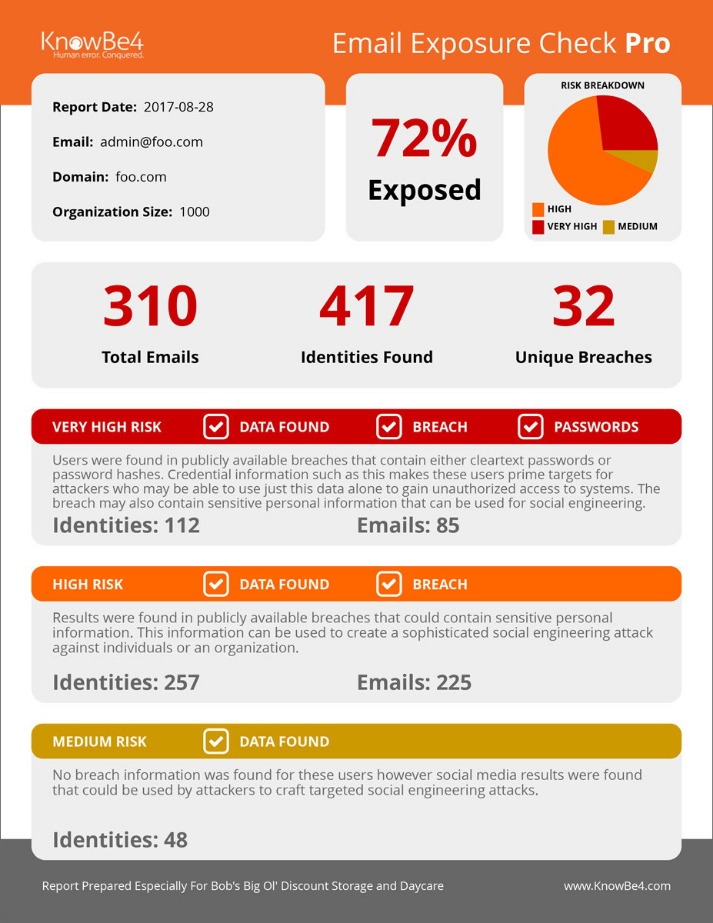
Deep Web pages include personal pages like webmail inboxes and account pages on various sites. They also include internal company data and sites that are accessible via the Internet but protected by authentication. Although the Dark Web is often used for illegal activities, it’s not illegal to access it in many countries. Some people use the Dark Web for legitimate reasons, but prefer to remain anonymous.
Dark web monitoring complements access controls, network segmentation, and intrusion detection and response tools. Dark web intelligence and endpoint protection protect against hidden threats, while employee training helps manage phishing risks. Investigators could also accidentally encounter illegal content while browsing marketplaces and forums.
Why Is It So Important To Know The Difference Between The Deep Web And The Dark Web?

The most famous of these is Tor, which totally encrypts your identifying information before connecting you to dark websites. The deep web is also used by corporate organizations that want to protect sensitive business-related information, such as hospitals with online networks for internal use only. Cybercriminals, law enforcement, etc., all of these and more might closely observe who chooses to enter that dubious digital realm. In addition, there is always a malware risk in that uncharted territory. It’s mostly illegal, and some governments have their officials watching the dark web very closely for obvious reasons.
What Is The Best Dark Web VPN?
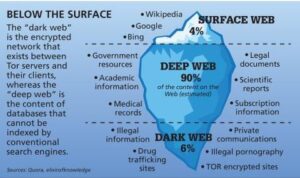
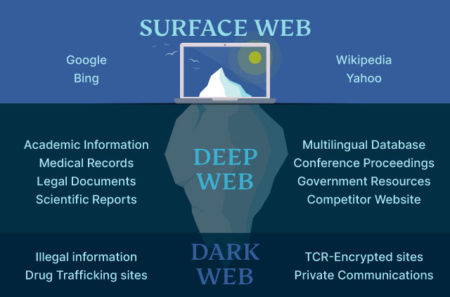
If you’ve done any amount of reading about the dark web, you’ve probably seen that iceberg illustration about the World Wide Web. The tip of the iceberg floating above the surface is the portion of the internet we can access through normal means — i.e. browsers and search engines. A repository of sites that can’t be found by traditional search engines, the dark web is as intriguing as it is dangerous.
What Is The Primary Difference Between The Deep Web And The Dark Web?
The Deep Web and Dark Web are part of the overwhelming virtual world. To use these browsers and their functionalities and understand the difference between Deep Web vs Dark Web, you need to read this blog till the end. When it comes to comparing the dark and deep web, the differences are many. But at this point, you have read the article and learned the basics.
Deep Web Vs Dark Web – Difference Between Them
- However, maintaining security procedures is critical even though these websites are legitimate.
- The deep web is essentially the part of the internet that is not indexed by search engines like Google or Bing.
- If you use strong account security and think before you click a link or download anything, you’re most of the way there.
- Check Point offers cyber security risk assessments, which help organizations to identify their cyber risks and develop plans for remediating them.
- It’s the part of the internet most people use daily, including news sites, blogs, online stores, and social media.
- Proactive threat intelligence gathering may have enabled Colonial Pipeline to detect attack planning and locate stolen credentials.
Transform how you manage cyber risk with the CRPM platform that unifies risk across your entire organization. The interconnection between these internet segments creates complex security challenges. The security implications of the surface web differ significantly from its hidden counterparts. From a regulatory perspective, the Deep Web aligns with mandates like GDPR, which demand controlled data environments. Businesses benefit from this, ensuring proprietary information remains exclusive.
Surface Web Vs Deep Web Vs Dark Web Vs Darknet
The dark web is a smaller, intentionally hidden part of the internet that requires special software (like the Tor browser or I2P) to access. It is designed to provide anonymity to both users and site operators. The Surface Web includes a wide range of websites and platforms, such as news sites, social media platforms, e-commerce sites, blogs, and informational websites. These sites are typically designed for public access and are easily navigable through hyperlinks and search engine results. Safely accessing the deep web and dark web is crucial for protecting yourself and your data.
In a nutshell, the deep web includes anything behind login walls, while the dark web is a small, deliberately hidden portion of it. Examples of the deep web include your personal banking login portal and academic databses. Due to its association with illegal activities, the dark web has gained a notorious reputation, while the deep web is simply an invisible part of the internet where mundane activities occur. One of the most often transactioned goods on the dark web marketplaces is your data. There are tons and tons of gigabytes of leaked credentials and personal information for sale for hackers.
It is composed of “non-indexed” content that is unreachable by the web crawlers used by Google, Bing, and other search engines to find and link pages. The good news is that there is a much faster version of privacy technology that is similar to Tor, albeit much faster. A VPN is a technology that (like Tor) provides you with a string layer of encryption to stop local networks, ISPs, and government agencies from being able to monitor your online activities.
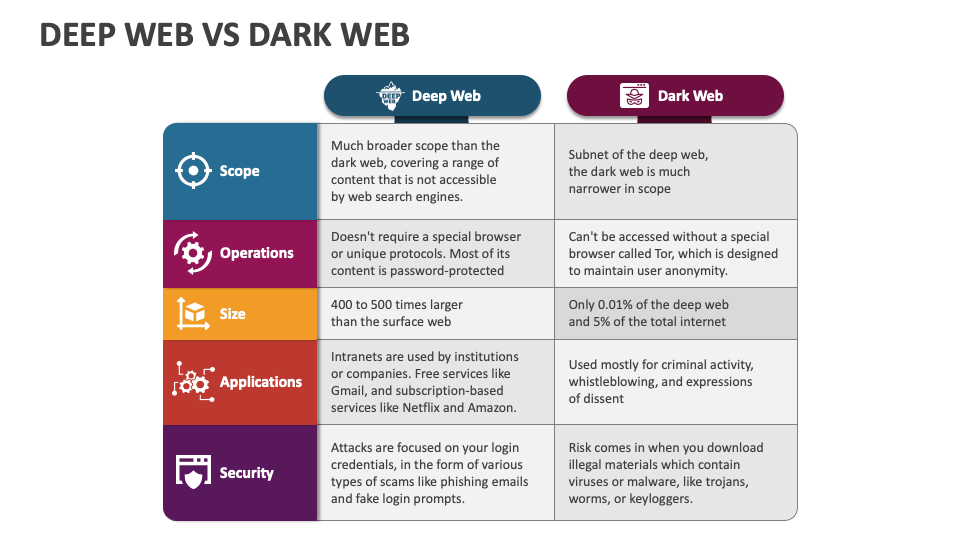
The deep web is a general, catch-all term that includes not only the dark web, but also includes a lot of “mundane content,” according to Andy Greenberg at Wired. That would include “registration-required web forums and dynamically-created pages” (like Gmail). The Dark Web is simultaneously a place of potential liberation for those seeking free expression under oppressive regimes and a hotspot for illicit activities.
It’s Hard To Access: False
In this case, attackers leveraged code flaws in the platform’s API, allowing them to scrape confidential information about users and their connections. Massive, containing more than 90% of the internet, consisting of hundreds to thousands of exabytes of data, eclipsing both the surface web and dark web. Privacy and security work differently in each one, and it’s important to know what to expect. In other words, the Deep Web is everything you use daily but isn’t open to the public. These three terms are often a source of confusion, especially in connection with cybercrime and where that comes from.