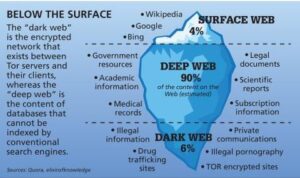
The dark web, which is what I’m discussing here, is a small subset of the deep web, and refers to websites that are specifically trying to stay out of sight. However, beyond what these tools reveal lies a vast, hidden part of the internet known as the Deep Web. This means that users cannot access the deep web through a search engine, as can be done to access content on the surface web. Instead, the information is stored online, in a way which ensures that it cannot be found by anyone who does not own the data or content. Users can access pages on the deep web via a direct URL or IP address, but they will need to pass through further security measures before they can access the content.

Cybercrime Isn’t Lurking It’s Surging
Its main goal was to prevent spy communications from being discovered; however, the framework was eventually repurposed and made public. Other options exist, but they are generally created to fulfill specific purposes, such as file sharing. If the surface web is the visible part of an iceberg above water, the deep web is the part submerged beneath – much larger but hidden from plain view. Some people use the terms ‘dark web’ and ‘deep web’ interchangeably; however, significant portions of the deep web are completely legal and safe to use. For instance, Harvard University received a bomb threat via a disposable email in December 2013.
What’s The Difference Between Deep Web & Dark Web?
Take a closer look at the differences between the two, and use Norton 360, with built-in VPN and AI-scam technology, to encrypt the data you send and receive online and help protect against scams. Accessing content on the deep web is relatively safe, and most internet users do it all the time. Logging into Gmail or LinkedIn, or signing in to the Wall Street Journal are just a few examples of accessing data on a deep web site.
Dark Web Vs Deep Web: What’s The Difference?
- For this reason, you must watch out and avoid opening anything that looks suspicious to you.
- One of the major misconceptions about the Deep web is that it’s illegal, well it’s not.
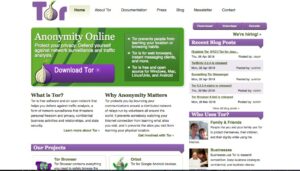
- Basically, any site with .onion extension is a site on the Tor network, and can be easily accessed with a Tor browser, although the site may or may not be illegal.
- It also offers works of art, course material, and audiobooks for download.
- Blockchain even has an HTTPS security certificate for even better protection.
It includes media and archives which cannot be crawled and indexed with current search engine technology. The Deep Web contains all the web sites that web crawlers cannot index. Examples of sites on the Deep Web that require a login to access include bank accounts, Netflix accounts, and social media accounts.
Is Using The Tor Network Illegal?
Tor anonymity comes with a cost since malicious hackers and criminals like to operate in the shadows. For example, perpetrators of trafficking and cyber attacks use the dark web to disguise their actions. However, there are some significant variances in the background despite the similarities.
Deep Web Search – A How-To Site
Whether accessing those darker parts of the deep web is illegal or not depends on the country you live in. In the US, anyone who wants to find out firsthand what is on the deep web and dark web can freely do so. In case you’re still interested in learning how to access the dark web, you’ll probably be surprised to hear it isn’t that difficult at all. (Whether you should do it is an entirely different matter, though.) You just need to download a browser for the dark web on your device and type in the URL of the website you want to visit.
The surface web comprises websites that are indexed and readily accessible through search engines like Google or Bing. In contrast, the Deep Web encompasses all the unindexed and non-searchable content, such as private databases, online banking systems, and academic journals. This hidden part of the internet is not inherently malicious, but it does require specialized tools and knowledge to access.

Secure Your System And Mental Well-being

The content is generally more secure and clean than that of the surface web. The deep web is a section of the internet that cannot be indexed by web crawlers. The dark web is a subsegment of the deep web that can only be accessed with special tools, such as the Tor browser. Therefore, although it’s not illegal to just access the dark web, it makes you one of a kind. And in the absence of an effective disguise, you can be summoned by your local authorities.
This is an excellent way for Dark Web users to provide additional privacy protection when accessing the Dark Web. Data gleaned from ransomware and data breaches is available on the dark web. Millions of customers’ personal data, including names, addresses, bank account and credit card account information, and many other forms of sensitive data. Social networks, such as Facebook, have created dark web versions of their sites to address privacy problems related to their surface web versions. ExpressVPN had created a .onion version of its website to allow greater privacy and anonymity for Tor browser users.

Step 4: Avoid Clicking Suspicious Links
Some of these are well-known, established threats that circulate in this nook of the web. However, others may be taking advantage of the dark web’s reputation to trick users out of large sums of money. Also, some users on the dark web may attempt phishing scams to steal your identity or personal information for extortion. The dark web refers to sites that are not indexed and only accessible via specialized web browsers. Significantly smaller than the tiny surface web, the dark web is considered a part of the deep web. Using our ocean and iceberg visual, the dark web would be the bottom tip of the submerged iceberg.
One of the major misconceptions about the Deep web is that it’s illegal, well it’s not. Infact many popular and legal sites such as Facebook have their .onion versions, so obviously not everything on the onion network or the deep web is illegal. And finally, there’s PGP encryption which you should use to your benefit. It’s an encryption which lets you encrypt your messages, E-mail and other communication so that it can’t be intercepted by govt.
- Other dark web search engines worth investigating are Ahmia, Torch, NotEvil, and the Onion URL Directory—just type out some keywords for what you’re looking for.
- If you get a reliable vendor, you should procure the services to stay safe when accessing the dark web.
- There are data incompatibilities and technical hurdles that complicate indexing efforts.
- Hacker services against banks and other financial institutions are offered there.
Finally, law enforcement agencies can access the dark web to detect illegal activity, such as weapon deals, drug distribution, and financial crimes. For instance, money laundering can be detected by correlating cryptocurrency wallet addresses with illicit activities. Law enforcement officials can also set up traps to capture criminals engaged in illegal transactions.
This process ensures that no single node knows both the origin and destination of the traffic, making it nearly impossible to trace the user’s identity or location. This robust encryption protocol provides a high level of privacy, appealing to privacy-conscious individuals, journalists, and activists operating in countries with strict internet censorship. The healthcare industry depends on the Deep Web to function securely and efficiently. Electronic Health Records (EHRs), diagnostic databases, and insurance platforms are all built within private systems.
The Drug Users Bible
Most people interact with the Deep Web every day, often without realizing it. When you log into your Gmail account, access your university’s course management system, or check your bank balance, you’re diving into the Deep Web. These services are protected by login credentials and encryption, shielding them from public indexing. Yes, police can track users on the dark web, but it’s challenging and resource-intensive, requiring advanced tools, undercover operations, and digital forensics to uncover illegal activity. So, while the dark web is designed for anonymity, it’s not impenetrable — mistakes by users, metadata leaks, compromised devices, or cooperation from hosting providers can all lead to exposure.